
Lines & Wrinkles
Two kinds of lines, and a plan for each.
What’s really
going on
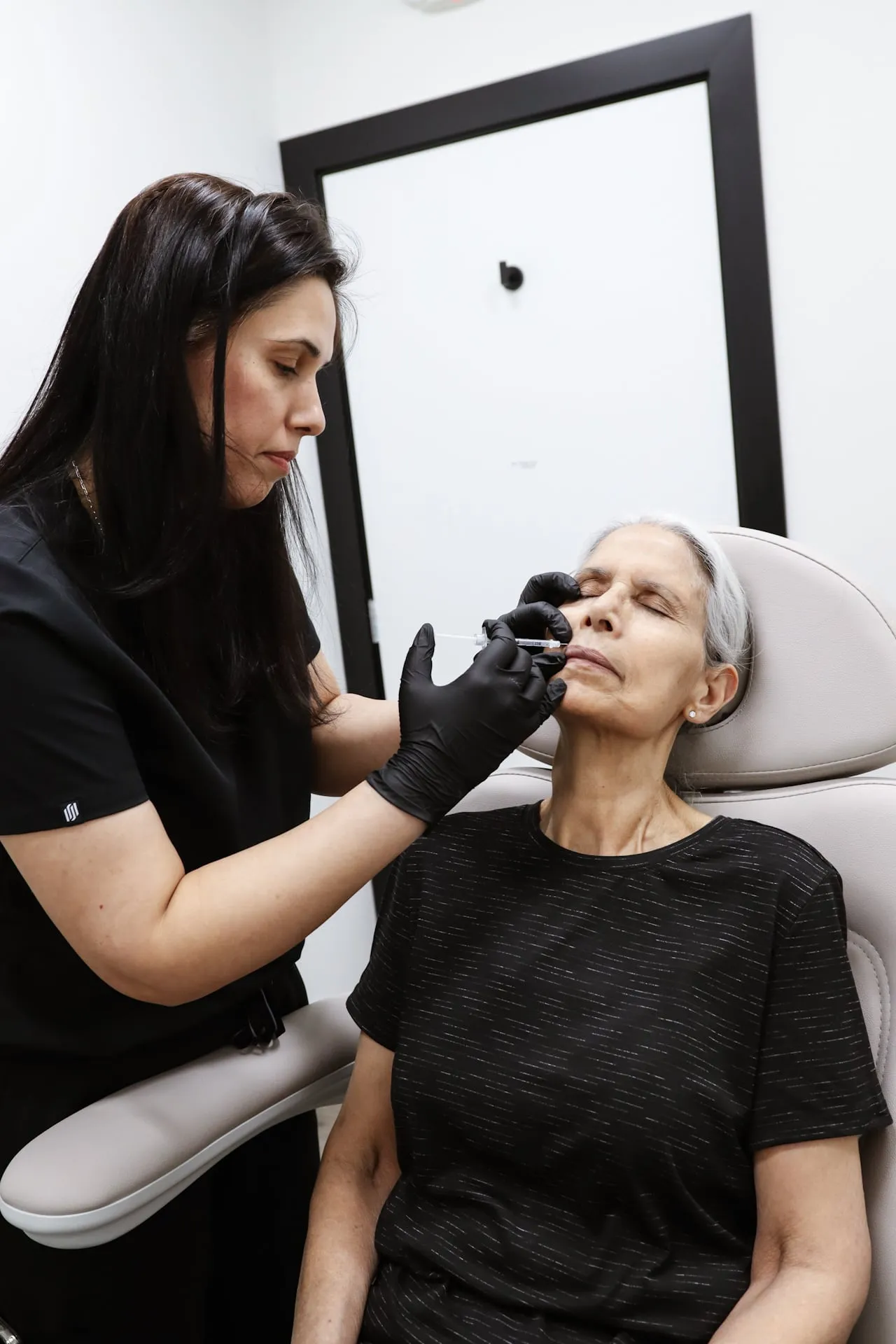
Lines form for two different reasons. Repeated muscle movement creases the skin, giving frown lines, forehead lines and crow’s feet. Collagen loss lets the surface thin and fold, giving etched lines and crepey texture. Which treatment suits you depends on which type you have, and most people have both.
Movement lines respond best to neuromodulators like Botox® and Xeomin®. Etched lines and thinning skin respond to collagen-rebuilding treatments, from gentle peels and SkinPen® microneedling through SkinTyte® and HALO®, ProFractional™ or Contour TRL™ resurfacing, while Belotero® dermal fillers restore the folds that come from lost volume. Dr. Sarai will map your lines and build a plan that treats each cause directly.
Not sure which treatment is right for you? Every plan starts with a consultation and a proper look at your skin.
How we treat it
Because lines have two causes, we treat with two toolkits. Movement lines (frown lines, forehead creases, crow’s feet) respond to precisely placed neuromodulators such as Botox® and Xeomin®, which relax the specific muscles doing the creasing while leaving your expression intact. Every injection at this clinic is performed by Dr. Sarai personally, with a physician’s working knowledge of the anatomy underneath.
Etched lines and crepey, thinning skin are a collagen problem, so they get collagen treatments: HALO® for broad renewal, ProFractional™ for lines that are carved in, Contour TRL™ for advanced etching around the mouth and eyes, and SkinTyte® where laxity is part of the picture. Most faces have both kinds of lines, which is why the best results usually come from a combined plan rather than a single product.
Who it’s for
Adults at almost any stage of the process. Small neuromodulator doses keep the first dynamic lines of the thirties from etching in, while resurfacing does the heavier lifting on established lines and texture change decades later. It is equally for people who have had injectables elsewhere and want a more anatomical, conservative hand: the goal here is a rested face, never a frozen one.
What to expect
Neuromodulator visits are brief: minutes, a few fine-needle injections, and straight back to your day. Results appear over three to ten days and typically last three to four months. Laser sessions run deeper: numbing cream, controlled heat, then a few days of redness and flaking while collagen rebuilding begins underneath, continuing for months after the surface has healed.
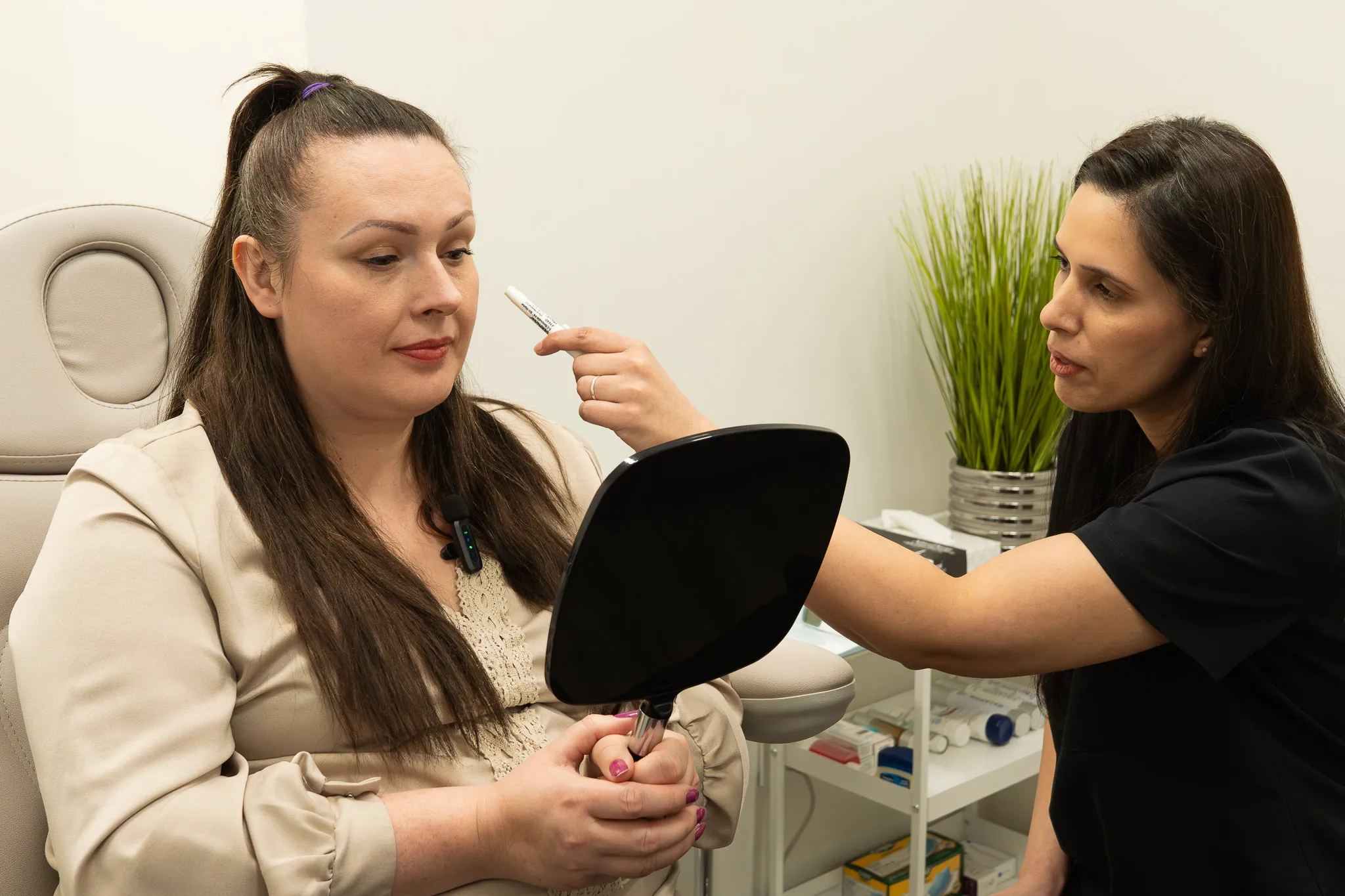
At your consultation Dr. Sarai maps which of your lines are movement-driven and which are etched, then sequences treatment so each cause is addressed by the right tool. Plans are reviewed as results settle, and maintenance of both kinds is scheduled to keep the result consistent rather than cyclical.
Wondering about cost? Standard prices for these treatments are listed openly on our pricing page, and your own plan is confirmed with Dr. Sarai at consultation.
Three Steps To Softer Lines
Assess
Dr. Sarai maps your lines and works out which are movement-driven and which are etched, because each type needs a different treatment.
Treat
A combined plan that treats each cause directly: neuromodulators for movement lines, collagen-rebuilding treatments from gentle peels through laser resurfacing for etched lines, and dermal fillers where volume has been lost.
Maintain
Scheduled maintenance matched to how your skin responds, so results stay consistent rather than cyclical.
Dr. Sundeep Sarai · BSc, MBChB, CCFP. Every treatment plan is physician-designed.
Ready to do something about it? Book a consultation at our Surrey clinic.
Dr. Sarai will assess your skin, then talk you through the options that actually fit.